Standardized vs Customized UPW System Design: Trade-offs for Today’s Semiconductor Fabs
Share this insight
After hosting a roundtable at UltraFacility 2025 on UPW system design, Scott Corney of Veolia provided further insights into the trade-offs between standardized and customized designs for UPW systems.
How did the roundtable discussion unfold?
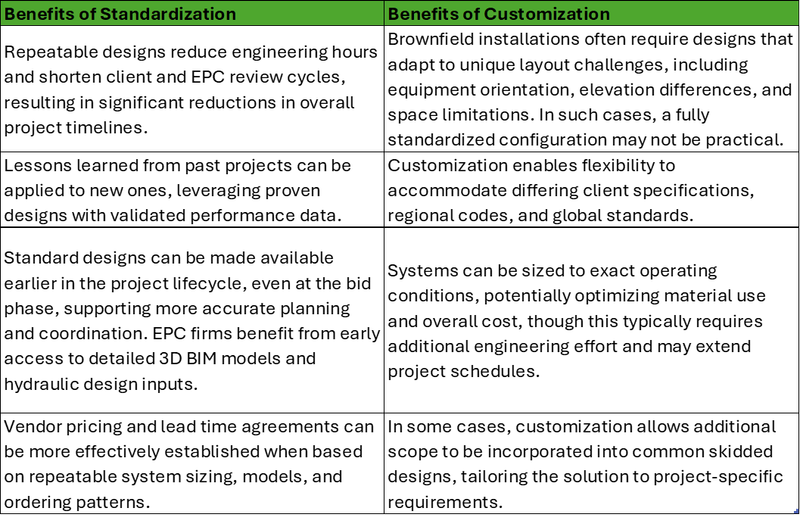
The discussion focused on the relative benefits of standardized versus customized design approaches in today’s increasingly competitive and technology-driven UPW market. Tighter specification limits, larger-scale fabs, and customers operating global manufacturing networks are all influencing how UPW systems are designed and delivered. A key question framed the session: What drivers are shaping project execution today compared to five or ten years ago?
What about flexible standards?
Not all unit operations need to be standardized within the flowsheet; a blend of standard systems can be offered into a customized solution. It is possible to build a base minimum viable product (MVP) base design with selectable add-on options to configure design with enhanced features based on client selections and available budget, or performance requirements.
Takeaway comments:
1. Some degree of industry standardization already exists in terms of component and material types. However, approved manufacturers and supplier lists may vary by site.
2. There appears to be a greater opportunity to implement standard designs if well-defined into new greenfield projects than within expansions in a brownfield installation. In brownfield expansions, space constraints and the need to align with existing equipment often limit standardization potential.
3. When proposing standardized versus customized configurations, the value proposition must be clearly communicated, particularly in terms of schedule savings, cost efficiencies, and client benefit.
4. Development of standardized designs should involve collaboration with one or more customers to ensure alignment with performance expectations and operational needs.
5. EPC companies appear to prefer standardized approaches because they provide detailed information earlier in the project lifecycle. However, there is recognition that many projects may ultimately require a hybrid model combining standardized and customized elements.
6. Unique client tagging and project identification requirements will need to be addressed when deploying standardized system configurations.
Share this insight

Collaborators

Scott Corney
Engineering Technical Domain Leader
Suez Water Technologies & Solutions - Canada
Organizations